
Contents and Arrangement
Subseries 3: Oliver La Farge, 1939-1963
Access Restrictions May Apply
All records in Series 3 are open for research use.
Collection Overview
Collection Description & Creator Information
- Scope and Contents
Series 3: Personal Files, Subseries 3: Oliver La Farge (1939-1963) is largely composed of correspondence and reports relating to La Farge's presidency of the AAIA, an organization with which he was synonymous. La Farge (1901-1963), an anthropologist and Pulitzer Prize winning author, dedicated half his life to the Association and the causes it championed. Born into a cultured New England family, he first encountered Native Americans when, as a student at Harvard University, he accompanied an archaeological expedition to the Navajo reservation. It was a seminal experience. As he would later say, "the Indians got me in 1921." Further trips to the Southwest followed, as did anthropological expeditions to Mexico and Guatemala on behalf of Tulane and Columbia Universities. In 1930 he was elected to the Board of Directors of the Eastern Association on Indian Affairs, as the AAIA was then known, and, in 1933, accepted its presidency. He held this post until his death, with the exception of the years between 1943 and 1948, an interregnum necessitated by his appointment as historical officer for the United States Army's Air Transport Command.
La Farge's assumption of the Association's presidency in 1933 also saw the adoption of a new name: the National Association on Indian Affairs. It was an appropriate conjunction, for, under his leadership, the Association evolved from a small and precariously situated entity to a vibrant organization with a multidimensional program and a national reach. Despite physical and financial hardships, he strove to better the lives of Native Americans by cultivating understanding, challenging injustice, and answering wants. His deftly written letters demonstrate an acute understanding of human character, and while he was intolerant of the inept and disingenuous, he could exercise great patience and diplomacy. His comprehension of Native Americans was not without limitations, but his commitment to them ran deep. As The New York Times declared on his death, "Oliver La Farge approached the Indian without maudlin sentiment. He liked and respected him, and with gentle but firm good nature he repelled the caricature of the modern Indian as a drunk and a wastrel.... He fought the Indian's battles before many a Congressional committee and White House advisory group. Others were in the fight, too, but it was La Farge's voice that was heard most frequently and most movingly in behalf of the country's original settler."
The material in this subseries documents La Farge's contribution and that of the AAIA to this struggle during the postwar portion of his presidency -- only a handful of items predate it -- and sheds light on the temperament of this influential figure. Researchers will encounter frank remarks on the AAIA's internal organization, its direction, and its relationship with such entities as the National Congress of American Indians and the Bureau of Indian Affairs. Of particular interest are taut discussions in 1955 concerning the future of Executive Director Alexander Lesser, who, according to La Farge, "is wrecking the association, and no amount of pleading, persuading, or arguing seems to make him see it." Administrative matters form only a part of this subseries, however. It includes substantial files on tribes such as the Navajo and Northern Cheyenne, as well as a collection of field reports containing detailed analyses of Indian communities in various parts of the country. Critical issues confronting Native Americans are also addressed, including the federal government's campaign to terminate its relationship with tribes and its efforts to regulate tribal attorney contracts, thereby limiting the ability of Indians to secure independent counsel. Other files document the AAIA's role in specific battles, such as the vain attempt of the Seneca to halt construction of the Kinzua Dam or the successful efforts of the Pueblo of Taos to secure title to its sacred Blue Lake. This subseries also offers insights into steps the Association took to foster change in public attitudes, a task at which La Farge, wordsmith that he was, excelled.
- Arrangement
The materials in this subseries are arranged alphabetically by type of record (e.g., Field Reports) or subject.
Collection History
- Appraisal
No information about appraisal is available for this collection prior to the 2007 addition. Materials related to particular scholarships were separated from the August 2007 addition [ML.2007.027] and returned to the donor as requested.
No materials were separated from subsequent additions in 2008-2015. The exception is the 2014 addition [ML.2014.007]; AAIA newsletters that had already been catalogued by Princeton's Firestone Library were removed.
Approximately 1.5 linear feet consisting of routine financial information, personnel records, and other out-of-scope materials were removed from the October 2016 addition [ML.2016.034].
- Sponsorship:
These records were processed with the generous support of The National Endowment for the Humanities and The John Foster and Janet Avery Dulles Fund.
Access & Use
- Conditions Governing Access
All records in Series 3 are open for research use.
- Conditions Governing Use
Single copies may be made for research purposes. To cite or publish quotations that fall within Fair Use, as defined under U. S. Copyright Law, no permission is required. For instances beyond Fair Use, any copyright vested in the donor has passed to The Trustees of Princeton University and researchers do not need to obtain permission, complete any forms, or receive a letter to move forward with use of donor-created materials within the collection. For materials in the collection not created by the donor, or where the material is not an original, the copyright is likely not held by the University. In these instances, it is the responsibility of the researcher to determine whether any permissions related to copyright, privacy, publicity, or any other rights are necessary for their intended use of the Library's materials, and to obtain all required permissions from any existing rights holders, if they have not already done so. Princeton University Library's Special Collections does not charge any permission or use fees for the publication of images of materials from our collections. The department does request that its collections be properly cited and images credited. More detailed information can be found on the Copyright, Credit and Citations Guidelines page on our website. If you have a question about who owns the copyright for an item, you may request clarification by contacting us through the Ask Us! form.
- Physical Characteristics and Technical Requirements
For preservation reasons, original analog and digital media may not be read or played back in the reading room. Users may visually inspect physical media but may not remove it from its enclosure. All analog audiovisual media must be digitized to preservation-quality standards prior to use. Audiovisual digitization requests are processed by an approved third-party vendor. Please note, the transfer time required can be as little as several weeks to as long as several months and there may be financial costs associated with the process. Requests should be directed through the Ask Us Form.
This collection contains materials acquired from an Apple iMac desktop computer and other unknown desktop computers. Researchers are responsible for meeting the technical requirements needed to access these materials, including any and all hardware and software.
- Credit this material:
Subseries 3: Oliver La Farge; Association on American Indian Affairs Records, MC147, Public Policy Papers, Department of Special Collections, Princeton University Library
- Location:
-
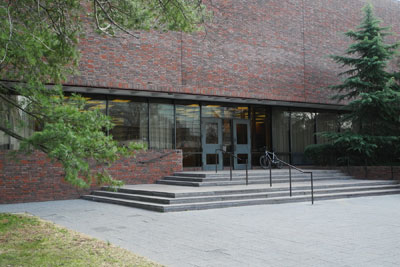
Seeley G. Mudd Manuscript Library65 Olden StreetPrinceton, NJ 08540, USA
- Storage Note:
- Mudd Manuscript Library (mudd)
- Boxes 401-404
Find More
- Existence and Location of Copies
Gale, part of Cengage group, has digitized a significant amount of materials from this collection. This product is available via subscribing institutions. While the images digitized by Gale are freely available via this finding aid (in addition to other materials digitized by Princeton), users may still find the Gale product helpful because it allows for full-text search of the body of digitized materials.
For more information about Gale digitization projects in the Public Policy Papers, including lists of subscribing institutions, see this guide.
- Names:
- Cook Inlet Native Association
Eight Northern Indian Pueblos Council
Alaska Federation of Natives
American Indian Community House (New York, N.Y.)
American Indian Defense Association
American Indian Development Corporation
Association of Contract Tribal Schools
Association of Village Council Presidents
United States. American Indian Policy Review Commission
United States. Bureau of Indian Affairs
United States. Department of the Interior
Tanana Chiefs Conference, Inc.
Inter Tribal Council of Arizona
Inuit Circumpolar Conference
John Hay Whitney Foundation
National Congress of American Indians
National Indian Education Association
Organization for Social and Technical Innovation
Burge, Moris S.
Byler, William
Cohen, Felix S., 1907-1953
Collier, John, 1884-1968
Debo, Angie, 1890-1988
Emerson, Haven, 1874-1957
Ernst, Roger C. (1914)
Flute, Jerry (1939)
Forbes, Henry Stone (1882)
Forbes, Hildegarde B.
Hanley, Joy J. (1940)
Kimble, Gary Niles
La Farge, Oliver, 1901-1963
Lazarus, Arthur
Lesser, Alexander, 1902-1982
Madigan, La Verne
McKittrick, Margaret
Ortiz, Alfonso, 1939-1997
Resnick, Idrian N.
Schifter, Richard
Smith, Corinna Lindon, 1876-1965
Stevens, Alden
Unger, Steven, 1946-


